
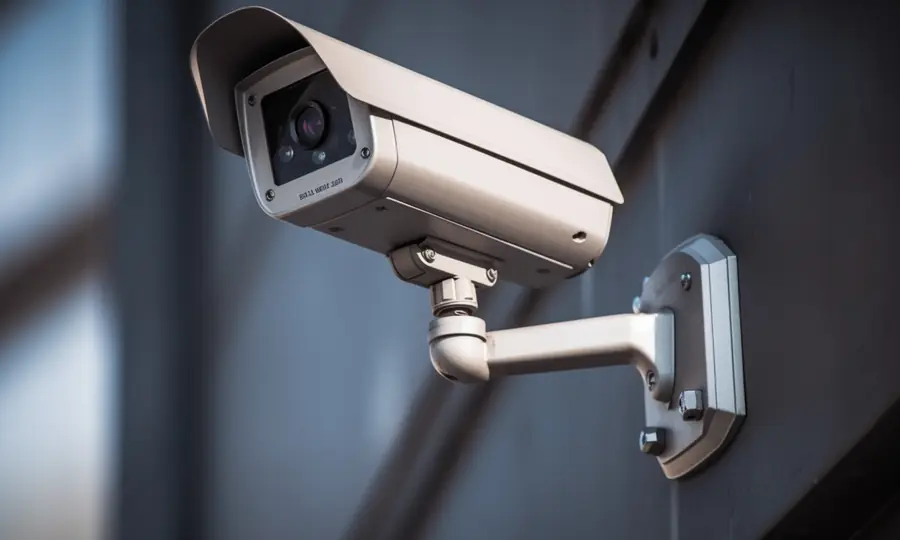
Cameras record activity. Guards inspect grounds. Treated as separate systems, each has a clear limitation - cameras see everything but can't physically intervene, while guards can respond but can't watch every corner of a site simultaneously. Real property protection happens when these two elements are linked directly, so a camera alert triggers immediate physical response rather than sitting in unreviewed footage.
Security guards working alongside remote monitoring alerts, rather than independently of them, close the gap between detection and intervention that either system alone leaves open.
This guide covers 7 ways coordinated static guard and CCTV integration protects Brisbane commercial properties more effectively than either system operating in isolation.
1. Deploy Digital Tripwires Along Boundary Fencing
Passive camera footage that's only reviewed after an incident provides evidence, not prevention. Digital tripwire analytics change this by actively monitoring boundary lines and triggering an immediate alert the moment a breach occurs, rather than waiting for someone to notice it on a screen.
Digital tripwire deployment includes:
- Virtual boundary lines configured along fence lines and access points
- Automatic alert generation the instant a crossing is detected
- Central desk notification with the specific breach zone highlighted
- Reduced reliance on constant human monitor-watching
- Integration with existing camera infrastructure without full system replacement
This active monitoring approach catches breaches at the moment they occur, rather than relying on someone reviewing footage after the fact.
2. Route Live Guard Response to the Exact Breach Coordinates
Once a breach is detected, response speed depends entirely on how quickly a guard can be directed to the correct location. Vague dispatch instructions like "check the north fence" waste critical time compared to precise coordinate-based routing.
Effective routing includes:
- Immediate coordinate identification from the triggering camera or sensor
- Direct routing to on-site guards or the nearest mobile responder
- Elimination of search time spent locating the actual breach point
- Real-time communication between command desk and responding guard
- Confirmation protocol once the guard reaches the identified location
Precise routing consistently produces faster interception times than dispatch models relying on general area descriptions rather than exact coordinates.
3. Use Remote Intervention Tools While Guards Are En Route
The gap between alert and physical guard arrival is a vulnerable window - but it doesn't have to be an empty one. Remote intervention tools like on-site speaker systems allow operators to actively deter trespassers during this window, rather than simply waiting for a guard to arrive.
Remote intervention capabilities include:
- Live audio warning delivered through on-site speaker systems
- Real-time operator assessment of the situation via camera feed
- Deterrence messaging tailored to the specific breach scenario
- Continued monitoring throughout the guard's response travel time
- Documentation of the intervention for incident reporting
Many intrusion attempts end the moment a trespasser realises they're being actively watched and addressed, before a guard even arrives on scene.
4. Position Static Guards Where Camera Coverage Has Natural Gaps
No camera system provides complete, gap-free coverage - blind spots exist around building corners, dense landscaping, and loading areas regardless of how comprehensive the camera installation is. Static guard positioning should specifically address these coverage gaps rather than duplicating what cameras already monitor effectively.
Strategic positioning considerations include:
- Identifying genuine blind spots through camera coverage mapping
- Positioning guards to cover gaps rather than redundant camera zones
- Rotating guard positions to address multiple gap areas across a shift
- Coordinating guard movement with camera pan/tilt/zoom capability
- Adjusting positioning based on identified vulnerability patterns
This complementary positioning approach delivers more complete site coverage than either cameras or guards could achieve independently.
5. Establish Clear Escalation Protocols for Confirmed Breaches
An alert without a clear escalation pathway creates confusion at exactly the moment speed matters most. Every integrated security system needs predetermined protocols defining what happens at each stage, from initial detection through to police coordination if necessary.
Escalation protocol elements include:
- Defined criteria for what constitutes a confirmed breach requiring response
- Clear chain of communication from detection through guard dispatch
- Predetermined threshold for police coordination and notification
- Documentation requirements at each escalation stage
- Post-incident review process to refine future response
Facilities with clearly defined escalation protocols experience faster, more consistent responses than those relying on ad-hoc decision-making during an active incident.
6. Maintain Continuous Coordination Between Guards and the Command Desk
Static guards operating without ongoing communication with the central monitoring desk lose the benefit of camera coverage entirely - they become isolated physical presence rather than part of an integrated system. Continuous coordination keeps both elements working as genuinely connected layers of protection.
Coordination practices include:
- Regular check-in protocols between guards and command desk
- Real-time briefing on any activity detected via camera during a shift
- Guard-reported observations fed back into monitoring awareness
- Shared incident logging accessible to both guard and desk personnel
- Coordination extending to labour hire staff on-site who may also flag security concerns during business hours
This ongoing communication loop ensures both the physical and electronic layers of security remain aware of the same current site picture.
7. Review Integrated System Performance Regularly
Security systems that combine static guards and CCTV benefit from periodic review to confirm the integration is actually delivering faster response and better coverage than either element alone - rather than simply assuming the combination works as intended.
Regular review should assess:
- Actual response times from alert to guard arrival across recent incidents
- Camera coverage gaps identified through incident pattern analysis
- Effectiveness of remote intervention tools in deterring past incidents
- Guard positioning adjustments needed based on observed vulnerability
- Client feedback on perceived security effectiveness and communication
Facilities that review integrated performance regularly identify improvement opportunities that a "set and forget" security approach would miss entirely.
Common Mistakes Facilities Make With Guard and CCTV Integration
- Operating cameras and guards as entirely separate systems. Camera footage reviewed only after an incident provides evidence, not the prevention that active integration delivers.
- Giving vague location instructions during breach response. General area descriptions waste critical response time compared to precise coordinate-based guard routing.
- Leaving the alert-to-arrival window unaddressed. Remote intervention tools like speaker warnings can deter trespassers during the gap before a guard physically arrives.
- Positioning guards redundantly with camera coverage. Static guards deliver the most value when positioned to cover genuine camera blind spots, not areas already well-monitored.
- Never reviewing integrated system performance. Without regular review, coverage gaps and response inefficiencies go unidentified and unaddressed indefinitely.
Ready for Security Where Cameras and Guards Work as One System?
Detection without intervention is just documentation. Grip Patrols delivers integrated static guarding and CCTV monitoring across Queensland, with digital tripwire alerts, precise guard routing, and remote intervention tools working together as a single coordinated response system.