Warehouses are some of the busiest workplaces in Brisbane. Forklifts move between racking, trucks back into docks, pickers rush to fill orders and pallets come and go all day. In that fast moving environment, a small mess can quickly become a serious hazard.
Dust on the floor reduces forklift grip. A torn piece of shrink wrap can catch a wheel. A small oil leak can send a worker sliding. Regular warehouse cleaning in Brisbane is not just about presentation; it is one of the simplest ways to prevent injuries and keep operations running. Professional industrial cleaning services give busy sites the structure and equipment to stay on top of these risks.
In this guide, we explain how warehouse cleaning reduces safety risks, which areas need the most attention and how to build a cleaning plan that fits around your operations. Whether you run a distribution centre, a cold store or a small logistics site, these practices will help protect your team.
Why Is Warehouse Cleaning a Safety Issue?
Under Queensland's work health and safety laws, businesses must manage risks to workers as far as reasonably practicable. In a warehouse, many of those risks come directly from mess, dust and clutter.
Common cleanliness related hazards include:
- Slips on oil, water, coolant or product spills
- Trips over pallet debris, strapping and shrink wrap
- Reduced forklift traction on dusty floors
- Blocked aisles, exits and fire equipment
- Pests attracted by food waste and damaged stock
Keeping the site clean reduces these hazards before they cause harm. It also shows inspectors, auditors and customers that the business takes safety seriously, which supports contracts with retailers and manufacturers who audit their supply chains.
How Does Floor Cleaning Prevent Forklift and Slip Incidents?
Floors carry the heaviest workload in any warehouse. Every forklift, pallet jack and worker depends on a clean, stable surface to move safely.
Effective floor cleaning includes:
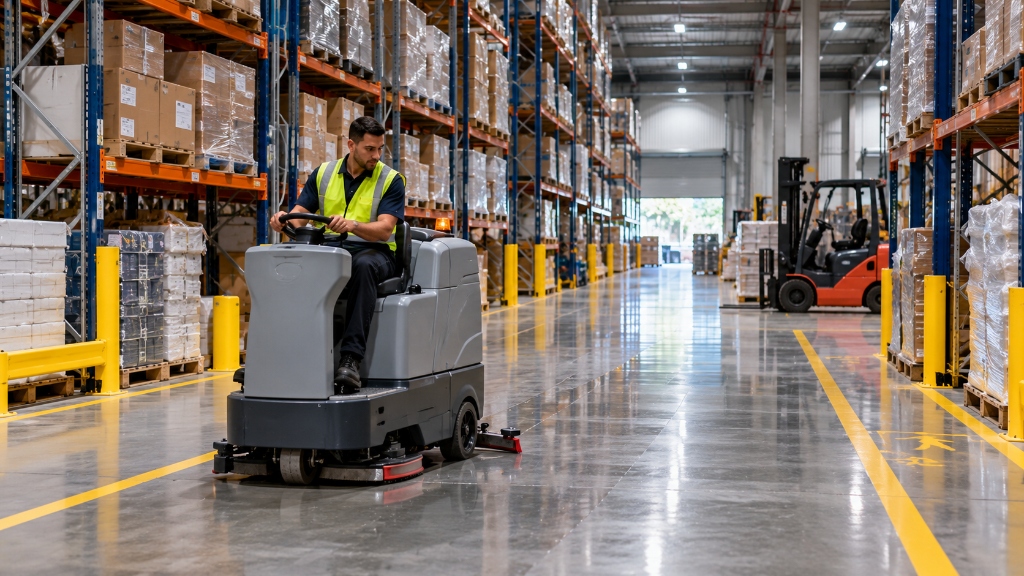
- Regular sweeping or scrubbing with ride on machines in main aisles
- Removing dust that builds up under racking and in corners
- Clearing shrink wrap, strapping and cardboard from travel paths
- Degreasing areas around charging stations and machinery
- Keeping floor markings visible so traffic routes stay clear
Clean floors improve forklift braking and steering, reduce tyre wear and keep pedestrian walkways clearly defined. Over time, they also protect the floor surface itself, reducing the need for costly repairs or resurfacing.
How Do Clean Docks and Entry Points Reduce Accidents?
Loading docks are where the outside world meets the warehouse floor. Rain, mud, leaves and debris are carried in on trucks, pallets and footwear, especially during Brisbane's summer storm season.
Dock and entry cleaning should cover:
- Sweeping and washing dock plates and levellers
- Clearing water pooling near roller doors after rain
- Removing broken pallets and packaging from dock areas
- Cleaning entry mats so they keep trapping dirt and moisture
- Checking drains near docks are clear of debris
The areas outside your doors matter too. Slippery paths and car parks can lead to injuries before staff even reach the building. Our article on how active groundskeeping prevents slip hazards explains how outdoor maintenance supports safety at entries and walkways.
Why Does Racking and High Level Dust Matter?
Dust does not only settle on floors. It builds up on racking, beams, lights and ledges, often out of sight. Over time, this high level dust creates problems that are easy to overlook.
Cleaning racking and high areas helps to:
- Keep stock and packaging clean for customers
- Prevent dust falling onto workers and products below
- Keep lighting bright by cleaning fittings and covers
- Maintain clear access to sprinkler heads and signage
- Reduce dust that can affect air quality and equipment
High level cleaning usually needs elevated work platforms, trained operators and careful planning around stock. It is often scheduled quarterly or during quieter periods, so it does not disrupt daily picking and dispatch.
How Should Warehouses Manage Spills and Waste?
Spills and waste are part of everyday warehouse life. The key is having a clear process so they are dealt with quickly and safely.
Good practice includes:
- Spill kits placed near chemical storage, charging bays and machinery
- Clear procedures for reporting and cleaning spills immediately
- Separate bins for cardboard, plastic wrap, pallets and general waste
- Regular removal of waste so it does not overflow into work areas
- Keeping food waste in lunchrooms to reduce pest activity
When waste is well organised, aisles stay clear and recycling becomes easier and cheaper. It also reduces fire risk, because piles of cardboard and plastic near electrical equipment are a hazard in any building.
When Should Warehouse Cleaning Be Scheduled?
The best cleaning plan fits around your operations rather than interrupting them. Many warehouses use a mix of daytime and after hours cleaning.
Common scheduling options include:
- Daily spot cleaning and spill response during operating hours
- Machine scrubbing of main aisles between shifts
- Detailed cleaning of amenities and offices after hours
- Periodic deep cleans during weekends or shutdowns
- Extra cleaning during peak seasons when traffic increases
After hours cleaning means cleaners are working when the site is otherwise empty. Controlling their entry is important for both security and safety. Professional access control services help warehouses manage keys, alarm codes and entry logs, so cleaning crews can work without leaving the site exposed.
What Should a Warehouse Cleaning Plan Include?
A clear written plan makes sure nothing is missed and everyone knows what to expect. It also makes it easier to measure the cleaning provider's performance.
A strong plan includes:
- A map of every zone, from docks and aisles to offices and amenities
- The tasks required in each zone and how often
- Safety procedures for working around forklifts and machinery
- Equipment and products to be used
- Inspection checklists and reporting requirements
- Contact points for urgent spills or incidents
Our guide on what a commercial cleaning scope of work should include covers how to set out zones, frequencies and audit standards before you sign with a provider.
Common Mistakes With Warehouse Cleaning
- Cleaning only when it looks dirty. Dust and debris build up long before they are obvious.
- Ignoring areas under racking. Hidden dust and debris eventually spread into aisles.
- Leaving spills for later. Even small spills can cause serious slips and forklift incidents.
- Skipping high level cleaning. Dust on racking and lights affects stock, lighting and safety.
- Having no written scope. Without a clear plan, tasks are missed and standards slip.
Conclusion
Regular warehouse cleaning in Brisbane protects your workers, equipment and stock. Clean floors improve forklift safety, clear docks reduce slips, high level cleaning keeps racking and lighting in good condition and organised waste keeps aisles open. With a clear plan and the right schedule, cleaning becomes part of how your warehouse runs safely every day. Contact our team to discuss a cleaning plan for your site.
For warehouses and logistics sites across Brisbane and the Gold Coast, GRIP Patrols provides industrial cleaning backed by security and facility support. We help keep your site clean, safe and ready for every shift. Get a quote from GRIP Patrols today.