
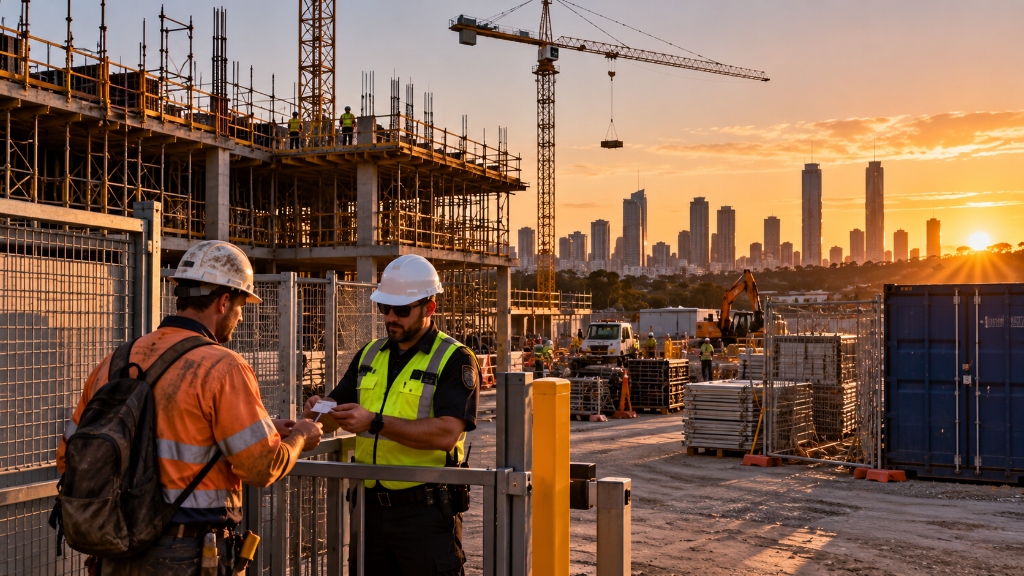
South East Queensland is in the middle of a building boom. New apartments, warehouses, roads and venues are rising across Brisbane and the Gold Coast, with more major projects planned in the lead up to the 2032 Olympic and Paralympic Games. Every one of those sites holds tools, machinery, fuel and materials worth thousands of dollars.
Unfortunately, construction sites are also among the easiest places for thieves to target. Temporary fencing, open boundaries and empty nights make them vulnerable, and a single theft can delay a project for days. Licensed security guards give builders a reliable way to protect their assets and keep projects on schedule.
In this guide, we explain why construction sites attract theft, what a construction site security guard does on the job and how to choose the right level of coverage at each stage of a build. Whether you run a small residential project or a large commercial site, these strategies will help reduce losses and delays.
Why Are Construction Sites Targeted by Thieves?
Construction sites combine high value assets with weak physical barriers. Temporary fences can be lifted, cut or climbed, and materials are often stored in the open. After hours, many sites are completely empty.
Commonly stolen items include:
- Power tools, generators and compressors
- Copper cable, piping and electrical fittings
- Diesel and fuel from tanks and machinery
- Timber, steel and other building materials
- Small plant such as rollers, mixers and light towers
The cost goes far beyond replacing what was taken. Theft causes delays while new equipment is sourced, pushes up insurance premiums and can trigger penalties if deadlines are missed. For builders working on tight margins, preventing theft is just as important as managing labour and materials.
How Does a Construction Site Security Guard Control Site Access?
Controlling who enters the site is the first line of defence. A construction site security guard stationed at the main gate makes sure only authorised people and vehicles get in.
Access control duties include:
- Checking workers against the site induction list
- Confirming that visitors and subcontractors hold a valid General Construction Induction card, known as a White Card
- Logging delivery vehicles and checking paperwork against expected loads
- Preventing unauthorised vehicles from entering or leaving with materials
- Keeping a record of everyone on site for safety and evacuation purposes
This process does more than stop theft. It supports workplace health and safety requirements and gives site managers an accurate picture of who is on site at any time, which is vital during an emergency.
How Do Guards and CCTV Work Together on Construction Sites?
Many construction sites now use temporary camera towers to watch large areas. Cameras are valuable, but they cannot stop an intruder on their own. They work best when paired with guards who can act on what the cameras see.
A combined approach allows guards to:
- Monitor camera feeds from the gatehouse or site office
- Respond quickly when cameras detect movement in restricted areas
- Review footage after incidents to support police and insurers
- Cover blind spots that cameras cannot reach
Together, guards and cameras create layered protection that is far stronger than either one alone. Our article on why static guards and CCTV monitoring work better as one system explains how this integration helps intercept intruders early.
How Do Guards Protect Tools, Fuel and Materials?
Theft prevention on a construction site depends on routine. Guards follow set procedures to make sure valuable items are secured at the end of each day.
Typical tasks include:
- Confirming tools are locked in site containers before workers leave
- Checking that machinery is immobilised and keys are removed
- Monitoring fuel tanks and storage areas for tampering
- Inspecting fences and gates for gaps, cuts or lifted panels
- Watching material deliveries and laydown areas
Guards also notice patterns, such as the same vehicle parking near the site each evening or fence panels repeatedly moved in one spot. Reporting these signs early gives site managers time to strengthen security before a theft happens.
How Do Guards Reduce Vandalism and Trespassing?
Not every intruder is a thief. Construction sites also attract graffiti, vandalism and curious trespassers, including young people looking to explore partly built structures. Beyond damage, trespassers create serious safety risks if they climb scaffolding or fall into excavations.
A construction site security guard reduces these risks by:
- Providing a visible presence that discourages people from entering
- Patrolling the perimeter regularly, especially at dusk and on weekends
- Asking trespassers to leave and contacting police when needed
- Reporting graffiti or damage quickly so it can be repaired
- Checking that scaffolding ladders, open edges and excavations are secured
Preventing trespass protects both people and the project. An injury to an intruder can still lead to investigations and delays, so keeping people out is always better than dealing with the aftermath.
How Do Guards Support Site Safety and Handover?
Guards on construction sites often become an extra set of eyes for the site manager. As they move around the site, they notice safety issues that could affect workers the next day.
Safety support includes:
- Reporting damaged fencing, signage or barriers
- Flagging water pooling, mud or debris on access routes
- Checking that site lighting works after dark
- Recording any incidents involving workers or visitors
As a project nears completion, security and cleaning become closely linked. Builders clean, remove dust, debris and residue before handover, and scheduling industrial cleaning services alongside security means finished areas stay clean and protected until the client takes the keys. Guards can also control access for cleaning crews in the final weeks.
When Should a Site Use Guards, Patrols or Both?
The right coverage depends on the stage of the build, the value of assets on site and the local risk level. Many projects use different approaches as the build progresses.
A common approach looks like this:
- Early works: Mobile patrols for sites with little equipment on site
- Main construction: Static guards during high value stages, especially overnight and weekends
- Fit out: Guards or frequent patrols to protect fixtures, appliances and finishes
- Pre handover: Guards to protect completed areas and control access
Combining guards with random patrols can also stretch the budget further. Our guide on how GPS tracked patrols beat predictability explains how randomised patrols protect sites when a guard is not needed all night.
Common Mistakes With Construction Site Security
- Relying on fencing alone. Temporary fences slow intruders down but rarely stop them.
- Leaving tools out overnight. Unsecured tools are the easiest target on any site.
- Installing cameras without response. Cameras record theft but cannot prevent it without someone to act.
- Using the same coverage for the whole build. Security needs change as the project progresses.
- Ignoring weekends and holidays. Sites are often most vulnerable when crews are away.
Conclusion
A construction site security guard protects far more than tools and materials. By controlling access, working with cameras, securing assets, deterring vandalism and supporting safety, guards help builders avoid costly delays and keep projects running to plan across Brisbane and the Gold Coast. Speak with our team about security for your next build.
For builders who need licensed guards, flexible patrols and reliable reporting, GRIP Patrols delivers construction security tailored to each stage of your project. We help protect your site, your schedule and your budget. Get a quote from GRIP Patrols today.