
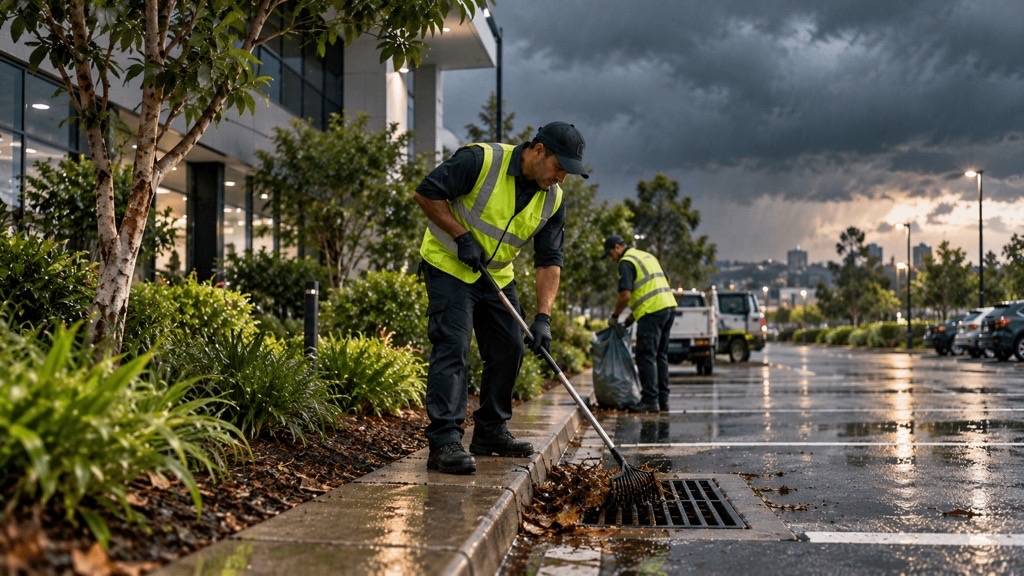
Queensland storms arrive fast and leave a mess. Blocked drains flood car parks, loose branches land on walkways and garden beds wash into gutters. Most of the damage is predictable, and most of it can be reduced with routine work done before the first big cell rolls in. Consistent grounds maintenance services are one of the cheapest forms of storm insurance a property manager can buy.
The risk is not only cosmetic. Debris, standing water and unstable vegetation create hazards for staff, visitors and contractors, and they can raise questions about whether reasonable steps were taken. A site that has been prepared is safer, recovers faster and is easier to defend if something goes wrong.
This guide covers the seven areas of grounds maintenance that matter most before and after storm season, so Brisbane and Gold Coast property managers can plan ahead instead of reacting to the forecast.
1. Trees and Overhanging Limbs Are Assessed Early
Weak or overhanging branches are the most obvious storm hazard on a commercial site. Regular inspection catches deadwood and crossing limbs before wind does it for you.
- Low branches over car parks, entries and walkways are trimmed back
- Hedges and shrubs are shaped so they do not become wind catchers
- Larger tree work is referred to a qualified arborist
A good grounds provider will tell you when a job belongs to an arborist rather than attempting it, because honest scoping protects your site and your insurance position.
Timing matters as much as technique. Pruning done well before storm season gives cuts time to heal and gives you room in the schedule, whereas emergency work in the middle of a warning is slower, costlier and riskier for the crew.
2. Drains, Gutters and Stormwater Pits Are Cleared
Blocked drainage is the fastest route to a flooded car park. Leaves, mulch and litter collect in pits and grates, and the first heavy downpour then pushes water where it should not go. For more on how scheduled clearing and drainage checks cut liability on walkways, see our guide on preventing slip hazards.
- Surface drains and grates cleared of debris
- Downpipe outlets and gutter edges checked
- Low spots where water pools noted and reported
Drainage work deserves a second visit mid season. Leaf drop and mulch movement continue after the first clear out, so a quick recheck in the wet months keeps the system working when it is needed most.
3. Loose Items and Landscape Features Are Secured
Wind turns small objects into projectiles. A pre-season walk of the site identifies anything that can move.
- Outdoor furniture, planters and signage secured or stored
- Bins and skip lids fastened
- Loose mulch, pebbles and edging repaired or topped up
This is a quick job that prevents broken windows, damaged vehicles and scattered rubbish.
Keep a simple checklist in the facilities office so that securing items becomes routine. When a warning arrives, the team can work through a known list instead of improvising under pressure.
4. Garden Beds Are Built to Handle Heavy Rain
Rain that arrives in bursts can strip bare soil and wash it onto paths. Well maintained beds hold their ground.
- Mulch kept at a sensible depth and pulled back from building walls
- Bare patches on slopes replanted or stabilised
- Hardy plants suited to local conditions, which is the principle behind our guide to low maintenance commercial gardens
Healthy beds also absorb water better, which reduces runoff onto hard surfaces.
Plant choice makes a real difference here. Dense groundcovers and hardy natives hold soil together better than bare mulch alone, and they usually need less water and attention through the rest of the year.
5. Lawns and Hedges Are Kept at Sensible Heights
Overgrown grass hides holes, hoses and debris, and it dries slowly after heavy rain. Regular mowing and edging keeps surfaces visible and walkable.
- Lawns mown on a set schedule through the wet season
- Edges trimmed to stop grass and roots lifting pavers
- Hedges kept tidy so they do not obscure sight lines or lighting
Height also affects safety inspections. When grass and hedges are kept under control, staff can spot cracked paving, exposed roots and faulty lighting long before a storm turns a small defect into an incident.
6. Post Storm Response Clears Debris Quickly
What happens in the first 24 hours after a storm decides how quickly your site reopens. Agree the response before you need it.
- Priority order: entries, walkways, accessible parking, then general areas
- Fallen branches and leaf litter removed
- Drains rechecked once the rain has passed
Standing water left after a storm can also invite mosquitoes and pests. Coordinate with your commercial pest control program so bin areas and drains are checked at the same time.
Communication is part of recovery too. A short message to tenants and staff explaining which areas are closed and when they will reopen reduces frustration and keeps people away from hazards while crews work.
7. Records Support Insurance and Compliance
If a storm causes injury or damage, records show that reasonable steps were taken. Dated checklists and photos are simple, cheap and valuable.
- Pre season inspection checklists signed and dated
- Photos of drains, trees and garden beds before and after storms
- A log of any hazards reported and when they were fixed
To talk through a storm readiness plan for your site, speak with our grounds team and we will help you build one.
Records are also useful for planning the next year. Reviewing what flooded, what fell and what was slow to clear shows exactly where to invest, whether that is extra drainage, tree work or changes to planting.
Common Mistakes to Avoid
- Waiting until the first storm to clear drains. By then the blockage has already caused the problem.
- Ignoring branches over car parks and entries. These are the limbs most likely to hurt someone or damage a vehicle.
- Piling mulch against building walls. It traps moisture and can hide pest activity.
- Having no post storm plan. Without agreed priorities, cleanup is slow and unfocused.
- Treating grounds as purely cosmetic. Landscaping affects drainage, safety and liability as well as appearance.
Conclusion
Storm season does not have to mean a scramble. Early tree assessment, clear drains, secured features, resilient garden beds, tidy lawns, a defined recovery plan and good records make a commercial site safer and cheaper to run through the wet months.
Managing a commercial property across Brisbane and the Gold Coast? GRIP Patrols can build a grounds program around storm season and your site. Ask for a quote today and be ready before the first front arrives.