
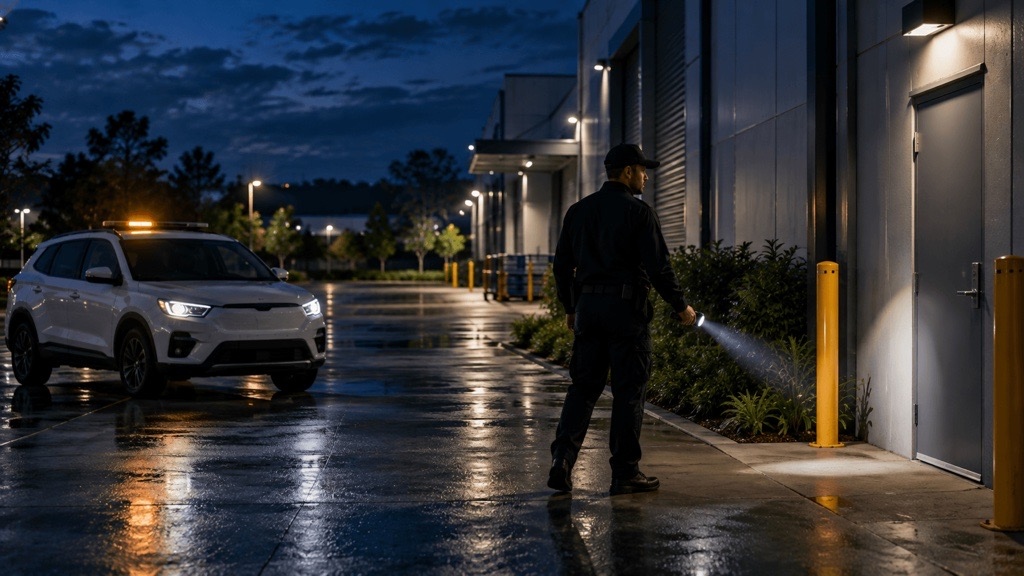
A security alarm goes off at 2am, and most business owners assume a guard simply drives over and looks around. The reality is a chain of decisions, and the quality of that chain decides whether you get a fast, safe response or an expensive false callout. Understanding it helps you judge any provider of mobile patrol services before you commit to a contract.
The process starts the moment a sensor, door contact or camera sends a signal. From there, operators, patrol units and your own contacts each play a part, and gaps between them are where delays creep in. A missing keyholder number or an unclear site map can cost precious minutes when they matter most.
This guide walks through what happens between the alarm trigger and a guard arriving on site, so Brisbane and Gold Coast facility managers know which questions to ask and what a reliable response should look like.
1. The Alarm Signal Reaches a Monitored Desk
Every response begins with a signal reaching people who can act on it. At GRIP Patrols, alarm events, boundary alerts and patrol check-ins are coordinated through a dispatch desk covering South East Queensland, with central alarm response coordination running around the clock.
- The signal shows which zone, sensor or camera was triggered
- The operator can see the site history, including recent false alarms
- The event is time stamped so every later step can be measured
That time stamp matters. Without it, nobody can prove how long each stage took.
Ask any provider who sits behind the desk and what training they hold. A monitoring team that knows your site layout, contact list and alarm history will make better decisions in the first thirty seconds than one working from a generic script.
2. Operators Verify Before They Dispatch
Verification separates a genuine threat from a gust of wind, a stray animal or a staff member who forgot the code. Operators check available camera views, review the alarm type and contact the site where appropriate. This is also where static guards and CCTV working as one system makes a real difference, because a live camera view can confirm an intruder in seconds.
- Camera footage is checked for movement, people or vehicles
- Several triggers in a short window raise the priority level
- A verified event goes straight to dispatch without waiting for callbacks
Verification also protects your budget and your relationships. Fewer unnecessary callouts mean less disruption for neighbours, fewer wasted patrol resources and more confidence that when a guard does arrive, there is a real reason.
3. The Closest Patrol Unit Is Assigned
Distance matters, so dispatch assigns the unit best placed to reach the site safely. Mobile patrols run tracked routes, which lets the desk see where each vehicle is instead of guessing. If you want to understand how randomised routes add deterrence between alarm events, our guide to GPS tracked patrols explains the approach.
Our patrol fleet is electric, so arrivals are quiet and do not warn an intruder or disturb neighbours. Response times depend on distance and traffic, so ask any provider how they measure and report them rather than accepting a single promised number.
It also helps to confirm what happens when the nearest unit is already busy. A good provider has a backup plan, such as reassigning another unit or escalating to a supervisor, so an alarm never waits in a queue.
4. The Guard Approaches With a Plan
Guards do not walk straight in. They approach from a safe position, observe the exterior and report back to the desk before deciding to move closer. Some triggers come from your own people, and late shift crews doing commercial office cleaning are a common cause of false alarms when a code is entered wrongly or a door is left ajar.
Sharing your cleaning schedule with your security provider prevents needless callouts and keeps genuine alerts credible.
- Cleaning and maintenance schedules shared in advance
- Contractor names and access times on file
- A clear process for staff who trigger an alarm by mistake
Arriving quietly and observing first also keeps the guard safe. An officer who has assessed the scene from a distance can describe what they see to the desk and police, which makes any later escalation faster and better informed.
5. On Site Checks Follow a Set Sequence
A consistent sequence prevents missed areas. The guard checks the perimeter, entry points, windows, roller doors and loading docks, then moves inside only when it is safe and authorised.
- Perimeter fencing, gates and lighting
- Doors, windows and roller doors for signs of forced entry
- Loading areas, car parks and storage compounds
- Internal areas only where access is authorised
NFC tags placed at key checkpoints confirm the guard physically visited each location, which turns a verbal “all clear” into a verifiable record.
Consistency is the point. When every response follows the same sequence, nothing depends on the habits of one individual, and supervisors can compare each visit against the same standard when they review the record.
6. Escalation Follows Clear Triggers
If the guard finds forced entry, an intruder or a safety risk, the desk contacts police and the nominated keyholder. Security officers in Queensland must hold a licence under the Security Providers Act 1993, and their role during an alarm response is to observe, deter and report rather than take unnecessary risks.
- Agree escalation triggers in writing before an incident happens
- Keep keyholder and police contact details current
- Confirm who can authorise urgent repairs, such as securing a broken door
Clear triggers also protect your staff. When everyone knows who calls the police, who attends the site and who approves repairs, nobody has to make a stressful decision alone in the middle of the night.
7. Every Step Is Logged and Reviewed
After the event, you should receive a report showing the alarm time, verification, dispatch, arrival, findings and actions taken. Patterns matter too. Repeated triggers from one sensor point to faulty equipment or a habit that needs fixing, and a good provider will raise it with you.
Ask any provider for a sample incident report before signing. If you would like your site's alarm response process reviewed, request a security review and we will walk you through it.
Treat these reports as a management tool, not just paperwork. Reviewing them quarterly with your provider lets you tighten procedures, update contact lists and decide whether extra cameras or patrol frequency would reduce risk.
Common Mistakes to Avoid
- Outdated contact lists. A keyholder who has left the business cannot help at 2am, so review contacts every quarter.
- Ignoring repeated false alarms. Frequent false triggers waste patrol resources and can hide a genuine problem.
- Vague access instructions. Guards need to know which gates, codes and entry points to use, and where not to go.
- No agreed escalation triggers. Without them, decisions get made under pressure and inconsistently.
- Judging on promised arrival time alone. A fast arrival means little without verification, safe approach and proper reporting.
Conclusion
A reliable alarm response is a process, not a promise. Signal, verification, dispatch, safe approach, site checks, escalation and reporting each need an owner and a record. When all seven are in place, false callouts drop and genuine threats are handled quickly and calmly.
Reviewing security for a commercial property in Brisbane or the Gold Coast? GRIP Patrols coordinates alarm response for warehouses, offices and other sites across QLD. Get a quote today and see the process for yourself.